
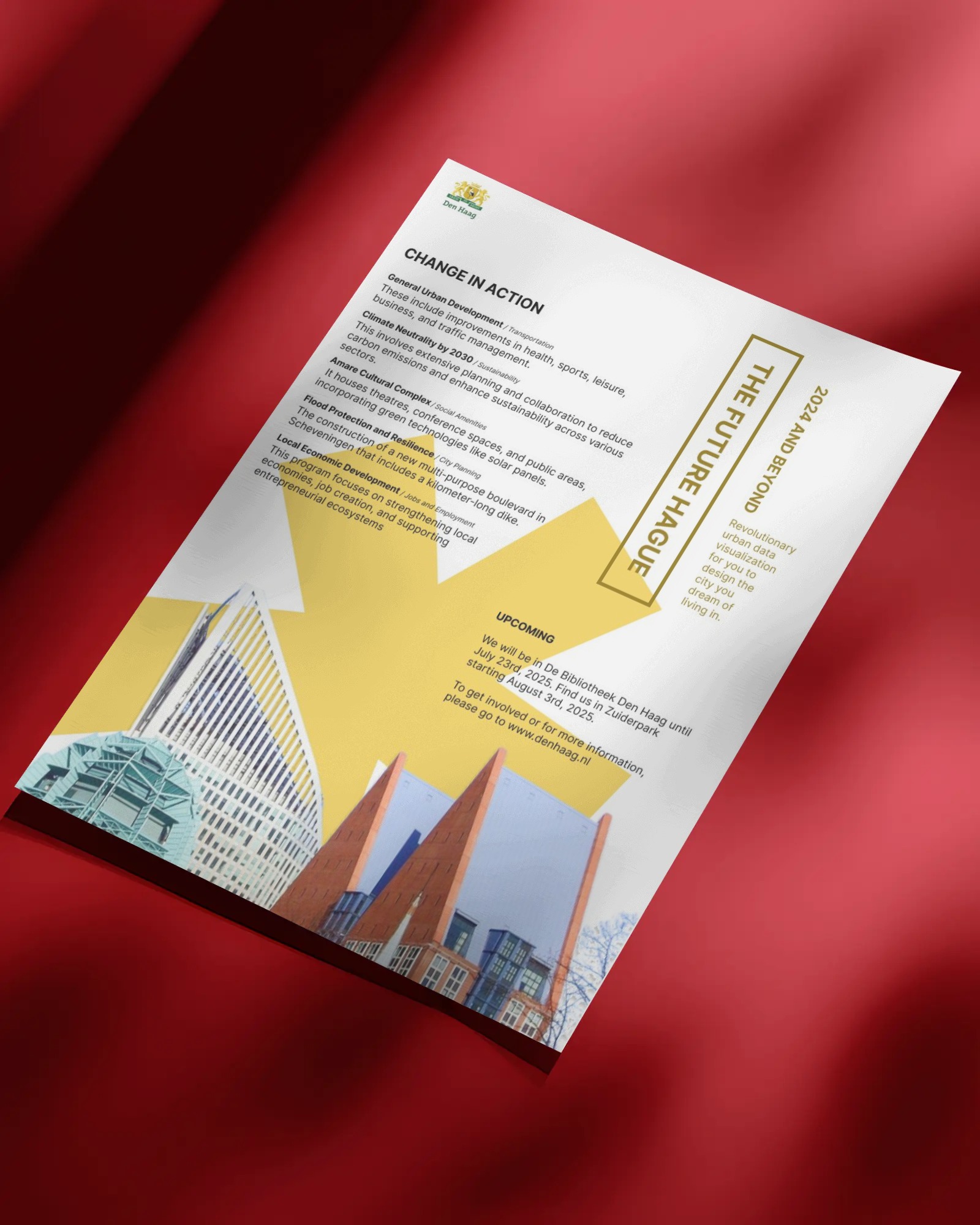
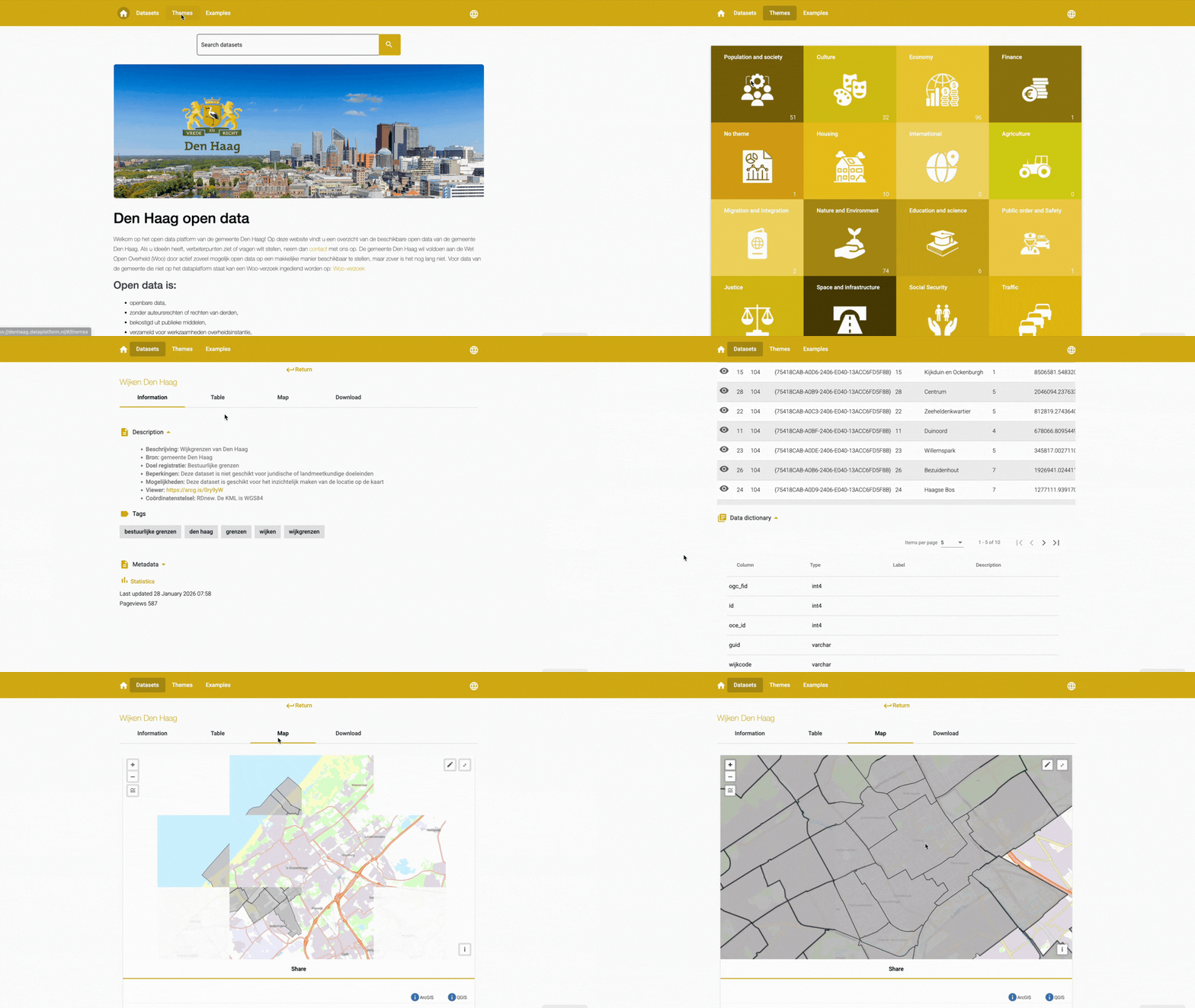
Overview of municipal data of the Hague (Open Data, 2026).
The Netherlands
The Municipality of The Hague
Intervention Design
Research & Ideation (Teamwork of 5)
4 months | 2024
The Collective Canvas is an intervention design project created with the Municipality of The Hague to explore how citizens can better understand and experience urban data.
Developed through extensive research, spatial analysis, and iterative prototyping, the final concept is a participatory installation designed for the central lobby of the The Hague Public Library. Citizens can manipulate thematic “scales” (e.g., green space, mobility, jobs) and immediately see how the city transforms around them through dynamic projections — allowing multiple users to co-create a shared vision of The Hague in real time.
✺ Led research synthesis and insight generation across user, spatial, and data domains;
✺ Guided the merging of three initial concepts into a unified final installation;
✺ Developed low- and mid-fidelity prototypes to test clarity and collaborative interaction.
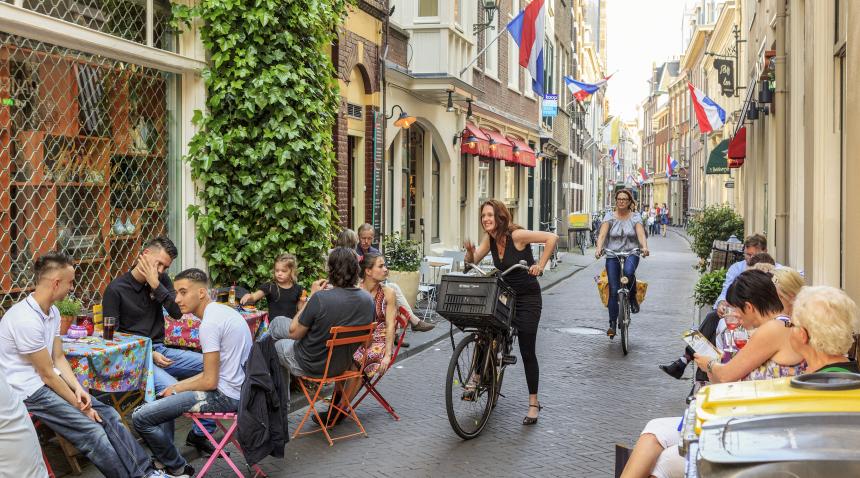
What municipal data do residents actually care about in their daily lives?
We explored:
What are residents’ motivations and behaviors in public spaces e.g. public libraries?
We explored:
How do residents perceive the municipal datasets, and what are the limitations of the data itself?
We explored:
Semi-Structured
Interviews


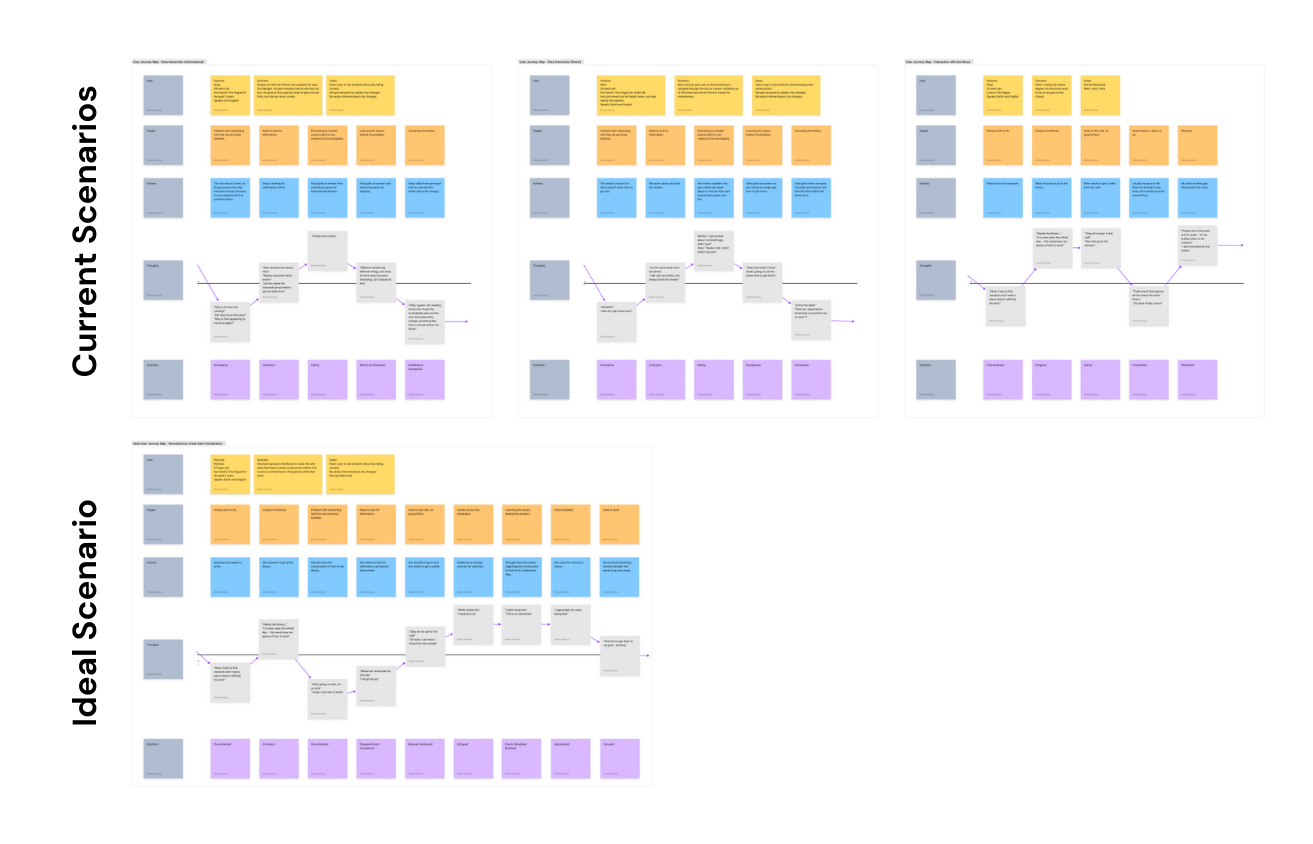
Contextual Inquiry

Behavioural Mapping
Goal: Document how visitors move, pause, and interact within the library.
%20(1).png)
Frequency Analysis
Goal: Identify patterns within 300+ municipal datasets.

User-Centered Data
Mapping

.png)

We produced 36 early concepts (18 sketched, 18 AI-assisted) to test different solutions and interaction models. After dot-voting with the team based on the project's core challenge, three concepts emerged as front-runners.
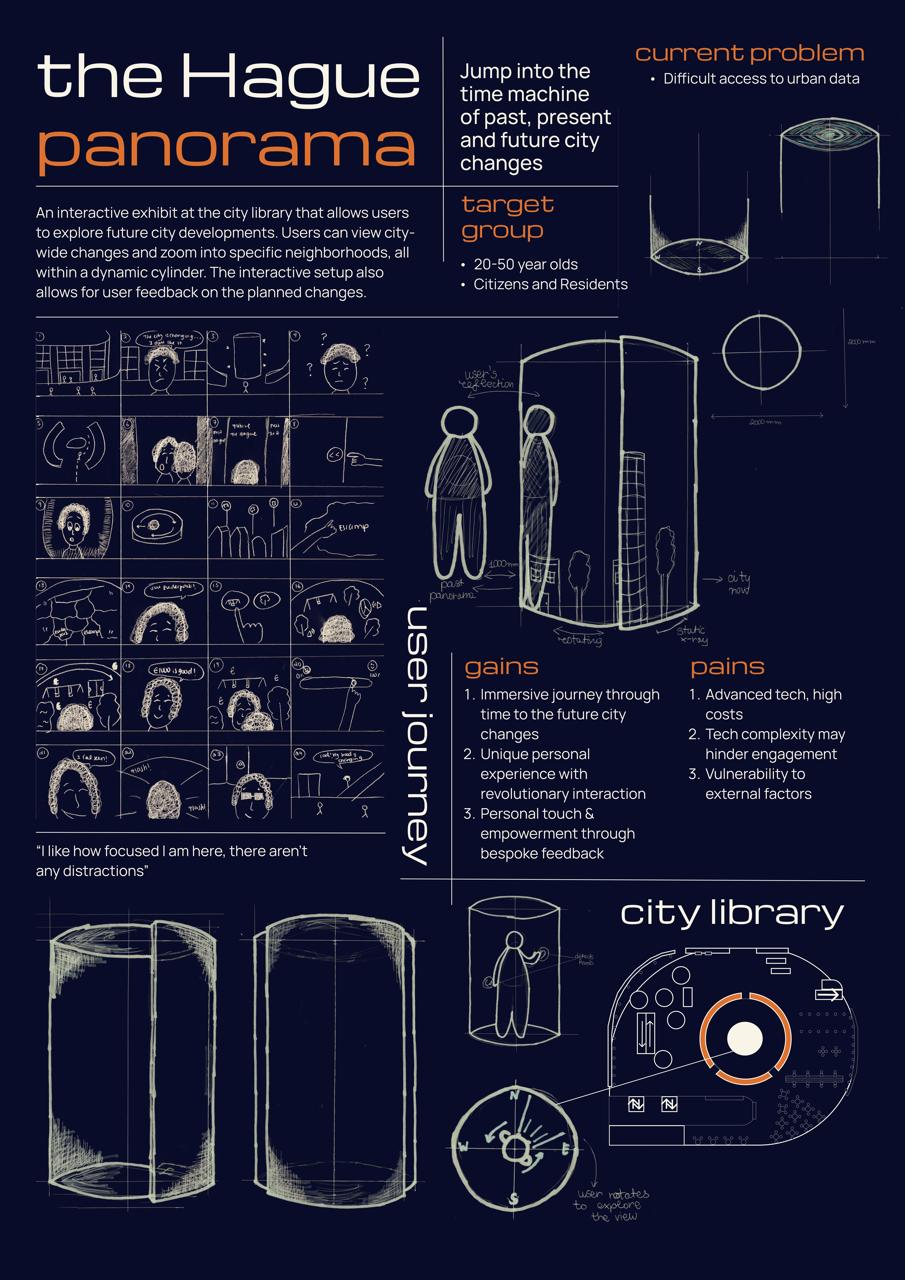
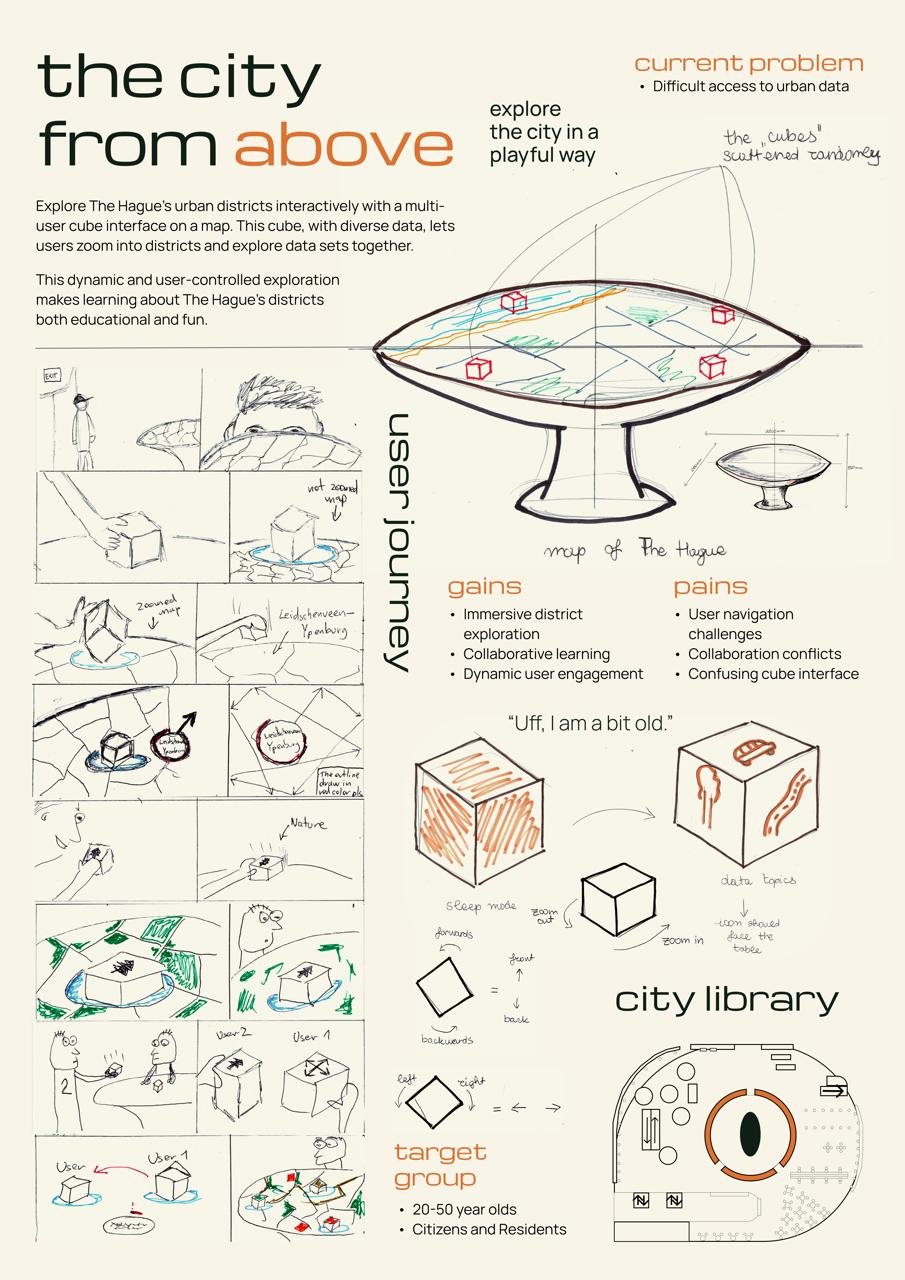
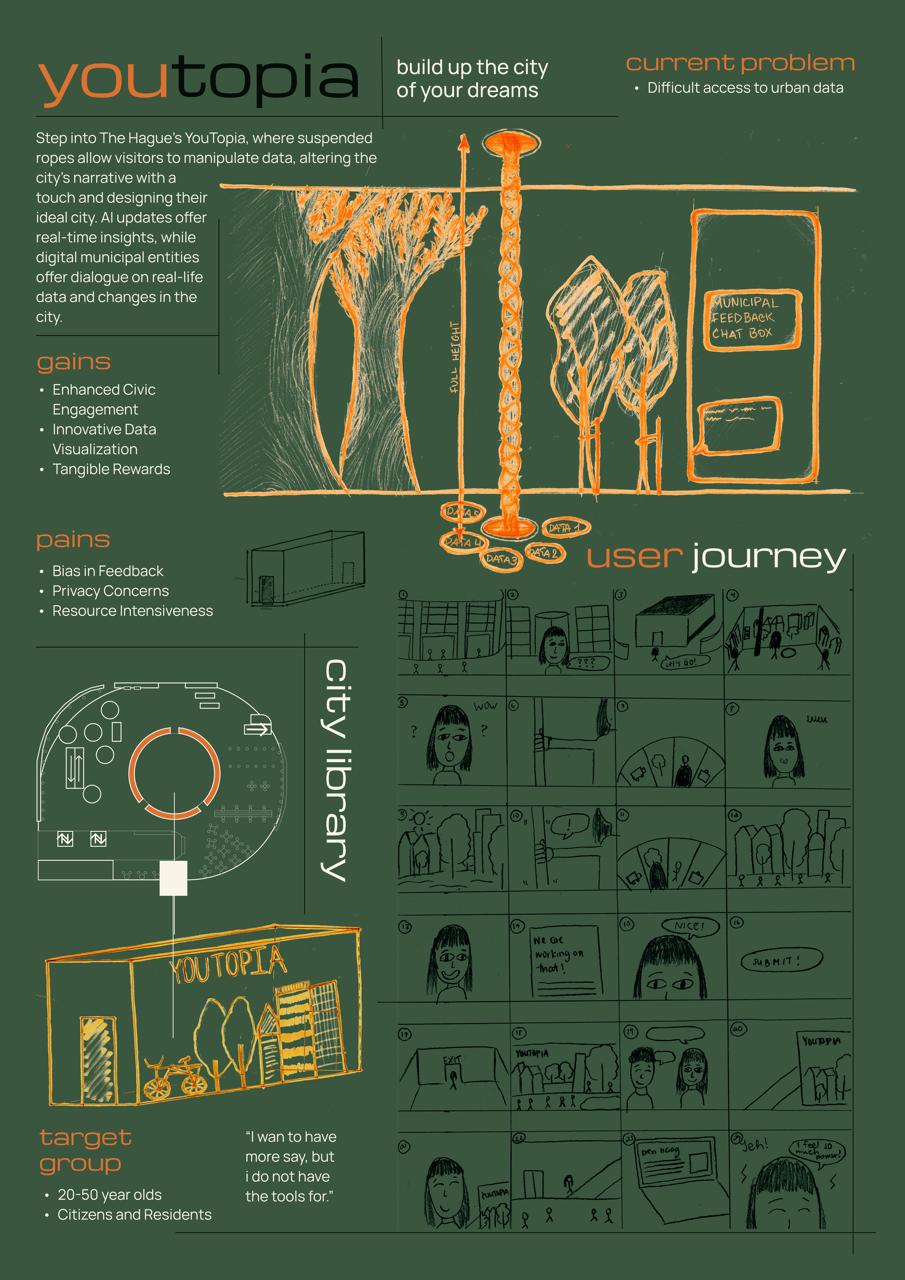
The final concept is a hexagonal, walk-around installation placed at the heart of the library.
It invites citizens to collaboratively shape visions of their future city using a set of Temis-inspired balancing scales, each representing a major urban data theme (e.g., Transport, Green Space, Housing, Jobs).
Visitors interact by turning physical wheels associated with these themes. As they adjust the balance:
When a group finalizes their preferred balance, they can submit their vision and instantly receive a printed mini-postcard of the city they co-imagined.

We built quick, low-fidelity prototypes to test interaction, clarity, and approachibility. Each round focused on one question: Do users understand what to do? Their reactions shaped the form, flow, and behaviour of the final installation.
.gif)
Take with a pinch a humor.

%20copy.jpeg)
The work reaffirmed my belief that design’s role is not to provide fixed answers, but to open possibilities, to make complex systems easier to see, understand, and talk about. This installation will not solve civic disengagement by itself, but it can make participation feel less abstract and more shared. It reminded me of the responsibility designers hold: we can shape the conditions through which people interpret their environment and their place within it.
This experience was an early step towards connecting interaction design, spatial experience, and civic systems - vast yet powerfully complementary fields.
~ Daniella de Rijke Rodríguez, July 2024.
Focused on designing a digital knowledge center that helps diverse audiences navigate complex ecological themes without compromising their experience.